My Role:
UX Design Lead
The Team
PM - Sarah Yang
Content Design - Pukraj Sidhu
UX Research - All team members
Context
This project unfolded over ten weeks during the Spring semester of 2022 in the User-Centered Design course, an upper-level undergraduate program at the University of Washington. Aligned with this quarter's theme of Education, we set out to tackle the well-being and ongoing needs of remote educators.
User Research
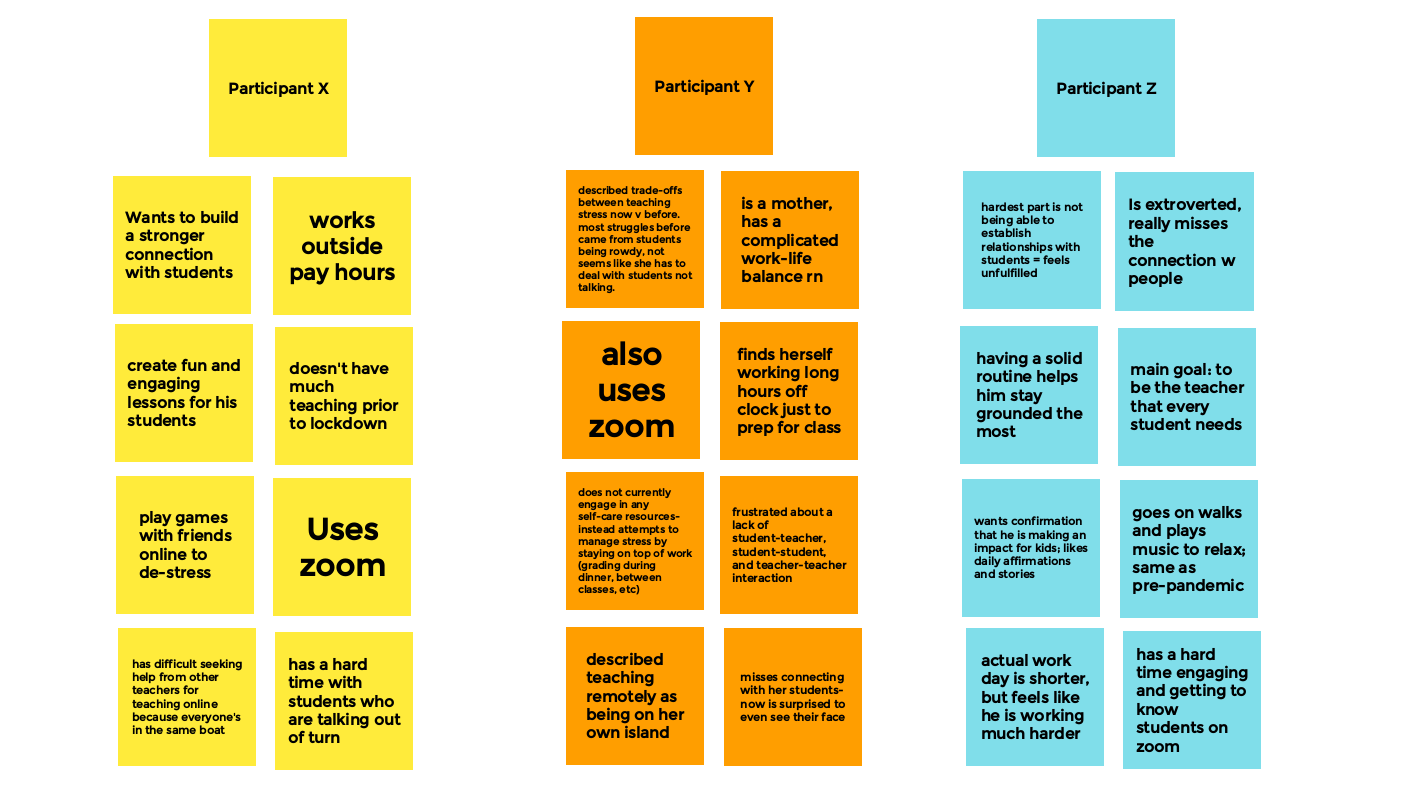
We interviewed 6 individuals with varying degrees of experience in the teaching field and so that we could identify pain points and values across our target audience.

We asked questions about their routine, what teaching is like in our remote circumstances, and how their mental, physical, and emotional health is now.

1. How has remote teaching impacted your well-being and mental health? 
2. Are there any specific tools or features that you wish were available to make remote teaching more effective and efficient?
3. In your experience, which types of learning resources (e.g., videos, interactive quizzes, e-books) have been most effective in engaging students in a remote setting?
4. Are there any specific accommodations or adjustments you believe could make remote learning more accessible for all students, including those with diverse learning needs?
quotes
  • Here are some key insights gathered from their responses:
  • Educators expressed feelings of isolation and increased workload due to the shift to remote teaching.
  • Educators encountered difficulties in establishing connections with colleagues who were also teaching remotely, making it challenging to exchange tips and experiences.
  • Educators highlighted the need for accessible content and materials to cater to students with diverse learning needs.
  • We identified beyond these categories includes increased off-the-clock work hours. This seemingly stems from blurred boundaries between work and personal life as well as the new demand of translating lesson plans into a format suitable for remote learning.
Competitive Analysis
In order to determine where the market for teacher’s support services is lacking, we analyzed existing products.

Problems between these platforms include:
Between each of these services, we realized that none served as both a community outlet and an aid for time management- specifically concerning lesson plans.

Base on our research insights, we honed in our design question:
HMW:

How might we create a collaborative platform that facilitates meaningful interactions, offers accessible resources, and streamlines teaching processes to alleviate workload and isolation challenges of remote Educators?

Personas
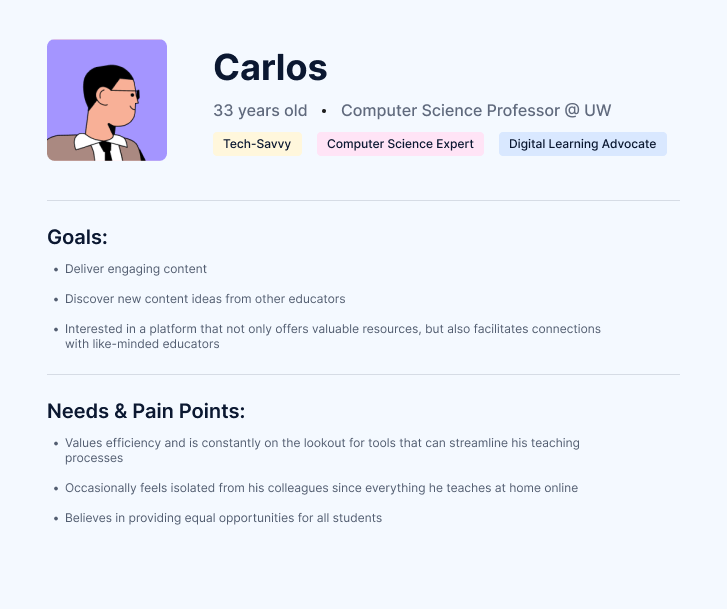
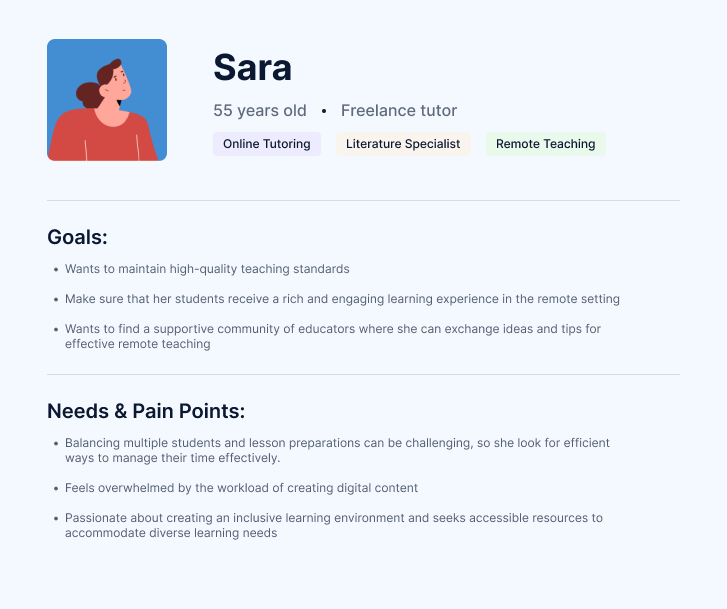
In order to understand the needs, challenges, and aspirations of our target users—remote educators —we developed two personas, Sara and Carlos.  These personas were created based on extensive user research, including interviews with six educatorss who are actively engaged in remote teaching.
Ideation
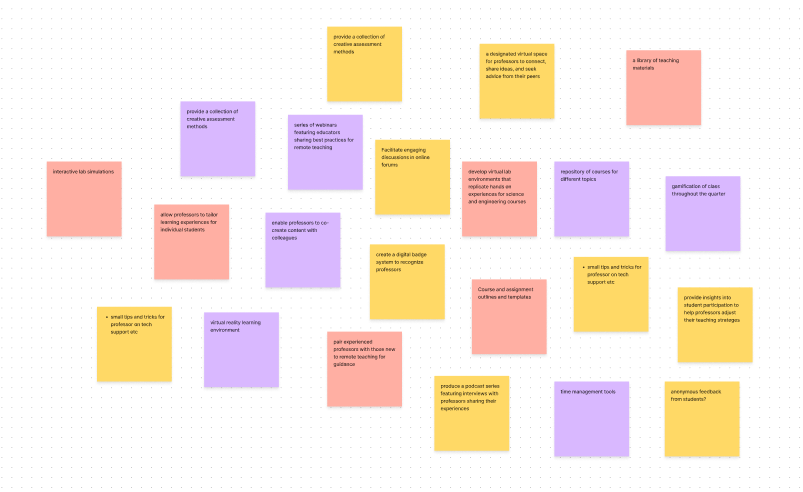
Following our research and gaining a comprehensive understanding of our users' needs, we embarked on the ideation phase. This encompassed multiple ideation sessions, including brainstorming sessions and affinity mapping.
Design Goals
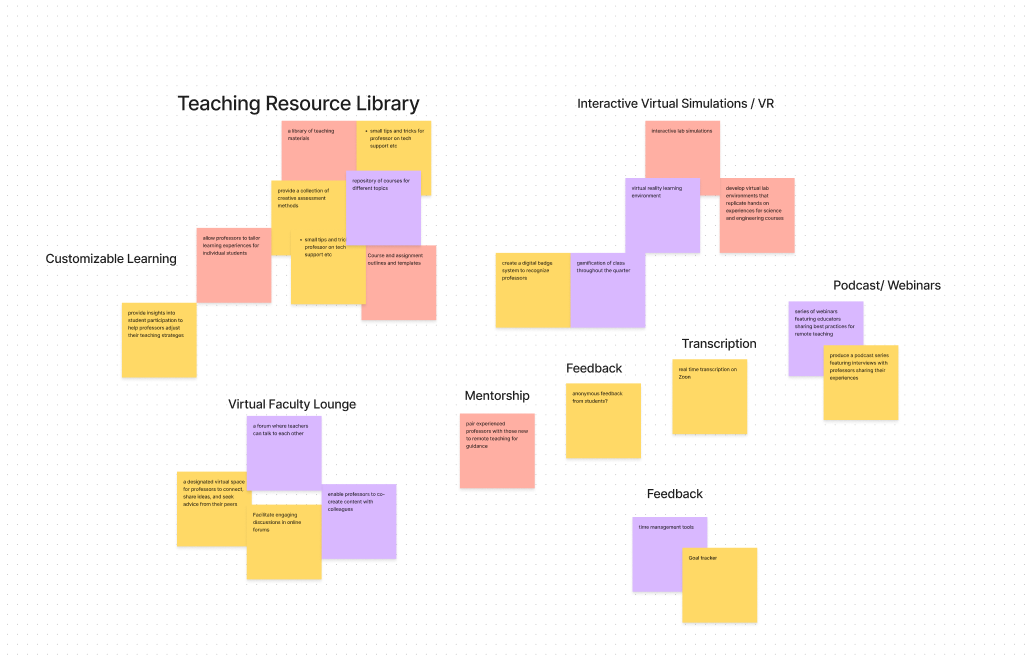
Following an extensive brainstorming session,  we proceeded to cluster each sticky note according to their shared themes. This process led to the creation of distinct categories, providing us with a foundation for our design direction.

Based on the insights gained from our research and ideation sessions, we have defined the key design goals for our platform.
  • Promote Meaningful Interaction: Foster a sense of community and meaningful interaction among educators to enhance collaboration and knowledge-sharing
  • Intuitive Navigation: User-friendly interface that allows educators to easily navigate and access the platform's features and resources
  • Accessibility and Inclusivity: Ensure that the platform is accessible to all users, including those with diverse needs by adhering to accessibility standards
Storyboard
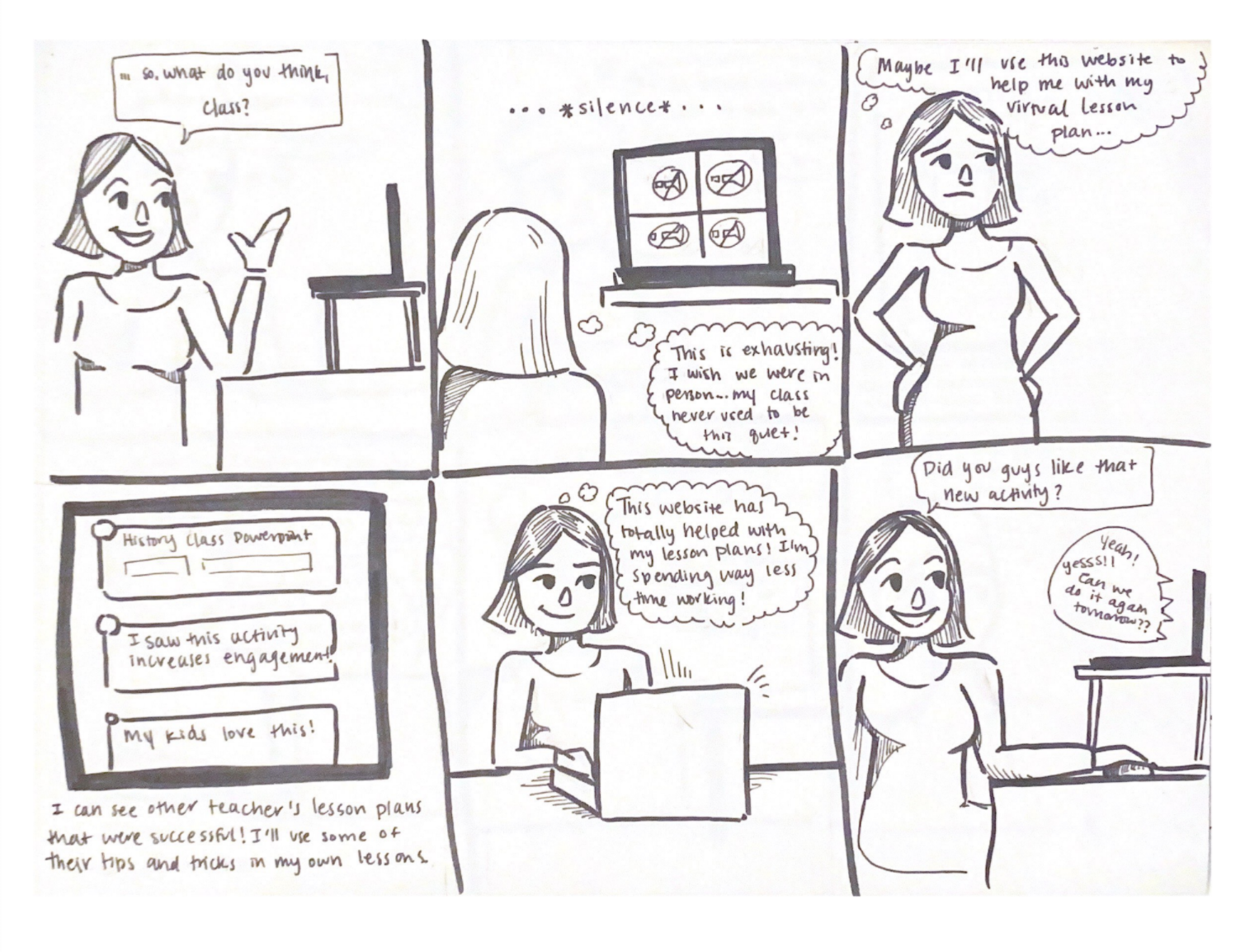
After establishing our design goals, we created our storyboard. These visual narrative showcases various potential use cases, demonstrating how our solution can address users' pain points and fulfill their needs.
Information Architechture
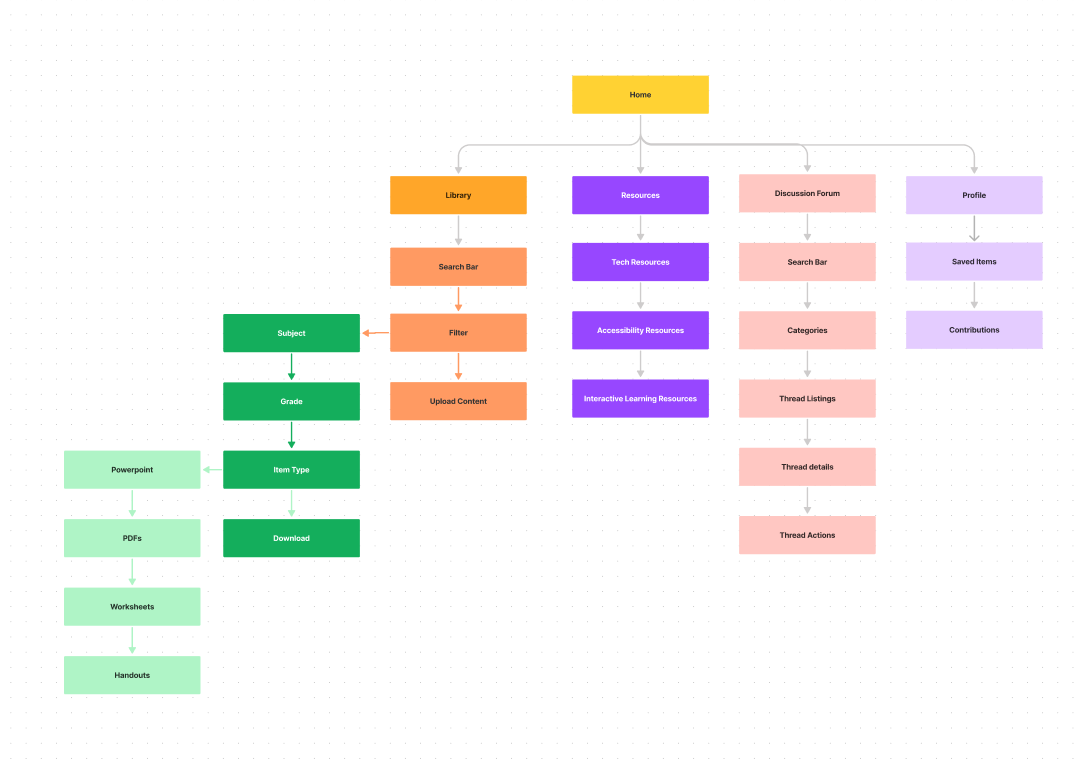
Our IA diagram was based on our storyboards and concepts generated during our brainstorming sessions. The IA served as our blueprint for creating user flows in the next step of our design process.
Mid-Fidelity Prototype
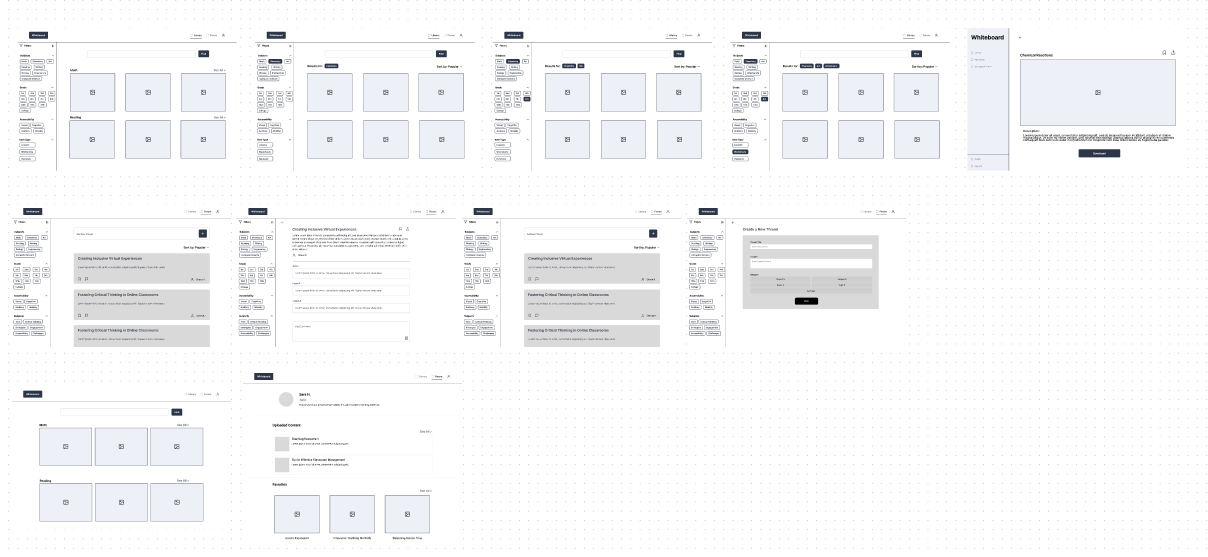
I used what we developed in our storyboards and information architecture to create a rough prototype of our project. My intention at this stage of the design process was to construct user flows that represent our envisioned design so we could test it with potential users of the platform. I used a visual design approach of simple lines, grayscale images and text placeholders, and the accent color of blue to highlight the primary elements and selected controls on a page.
Usability Studies
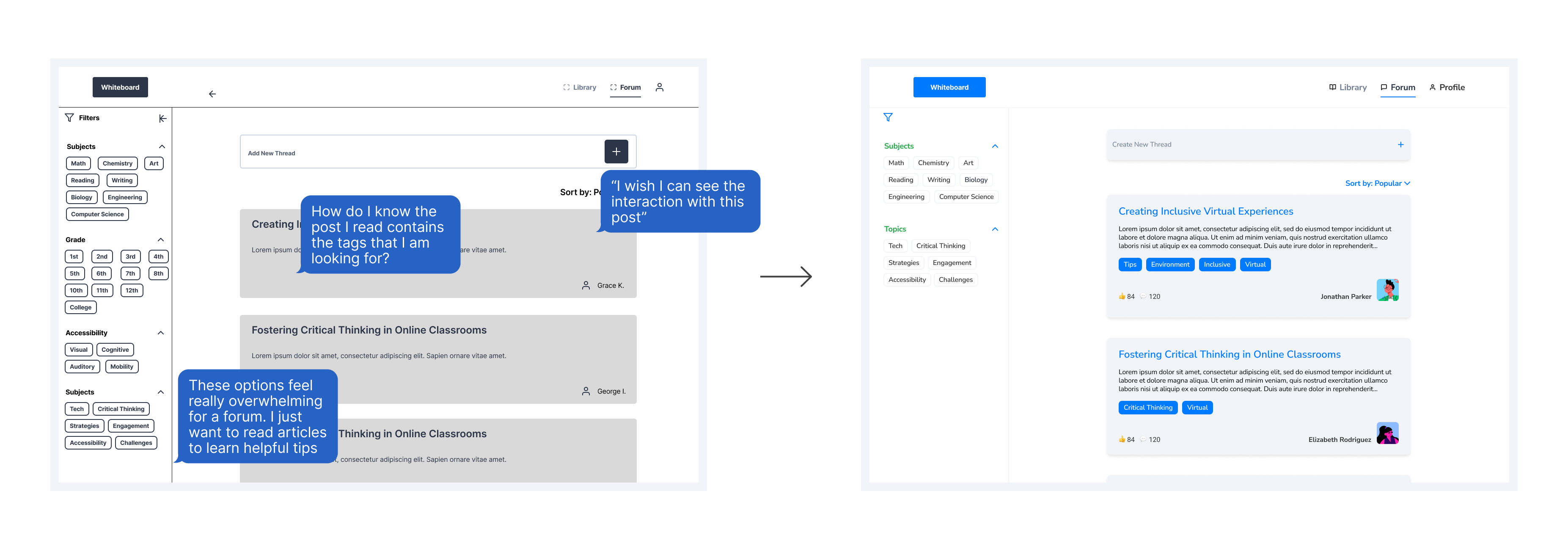
For usability testing, we conducted remote, moderated Think Aloud testing over Zoom with three participants. The users were asked to test three specific user flows and share what they were seeing, thinking, and feeling while interacting with the prototype. Within the 3 flows, users were asked to explore the homepage, create a thread, and find a customized lesson plan. Below is an image showing the must-fix issues after conducting usability studies.
Final Prototype
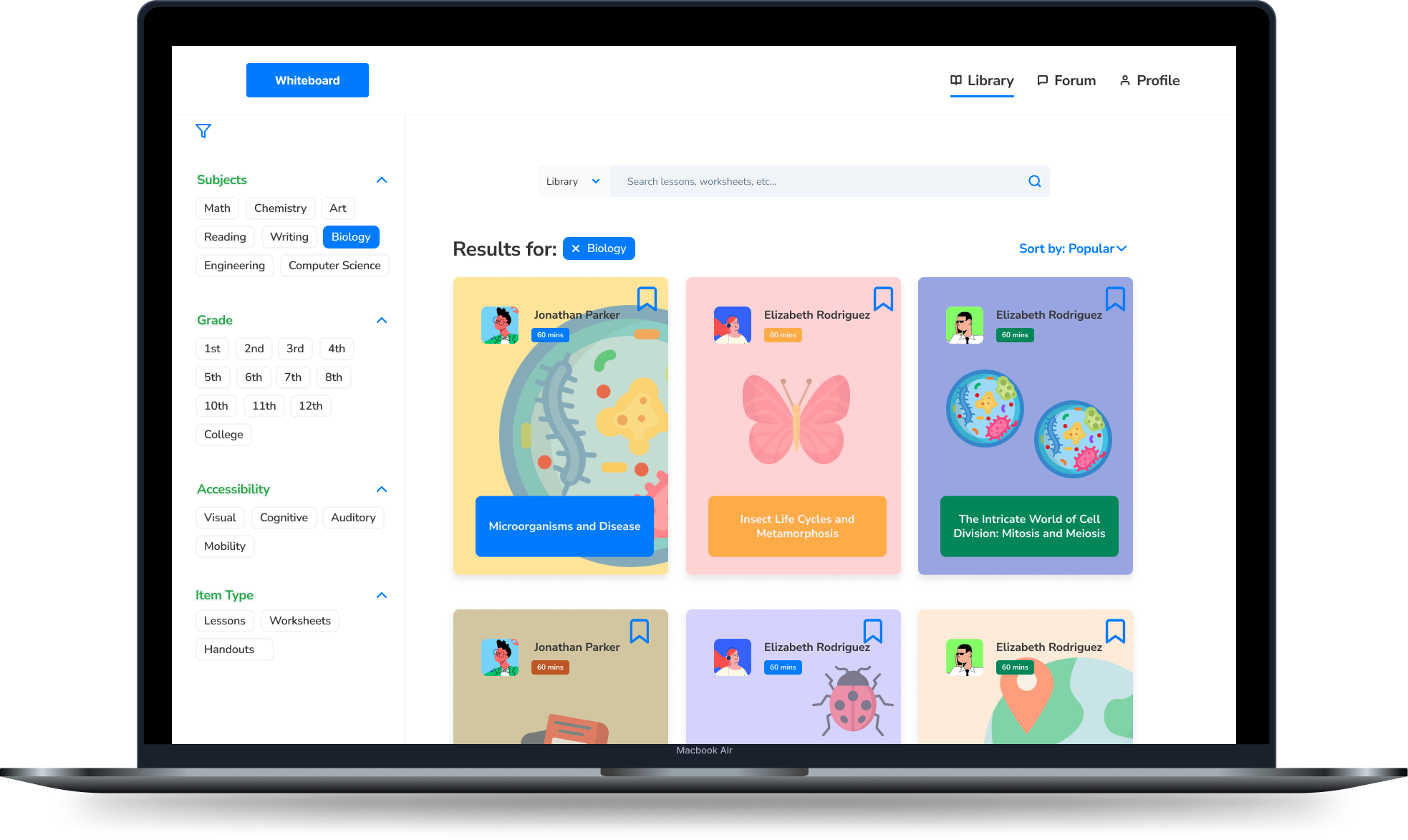
Based on insights discovered after analyzing our usability testing results, I iterated on our medium-fidelity prototypes and revised our flows into a high-fidelity prototype.
  • I personally learned a lot to understand what it means to empathize with our users and how we can listen to their stories to create a solution that makes their lives a little bit better. After completing our project, these are somethings my team and I would have done more differently if we have more time:
  • It’s truly important to validated your assumptions we’ve made during our research to prevent biases
    and unnecessary information before going to the design process.
  • Conduct usability testings so we can refine our solution and provide a better experience.
  • Providing data and reasoning early to demonstrate why certain features would alleviate stress from educators.
  • We also stepped back
Reflection
Olivia Tran © 2021-2022
Made with love and effort