.png)

.png)
.png)




Privacy Concerns:
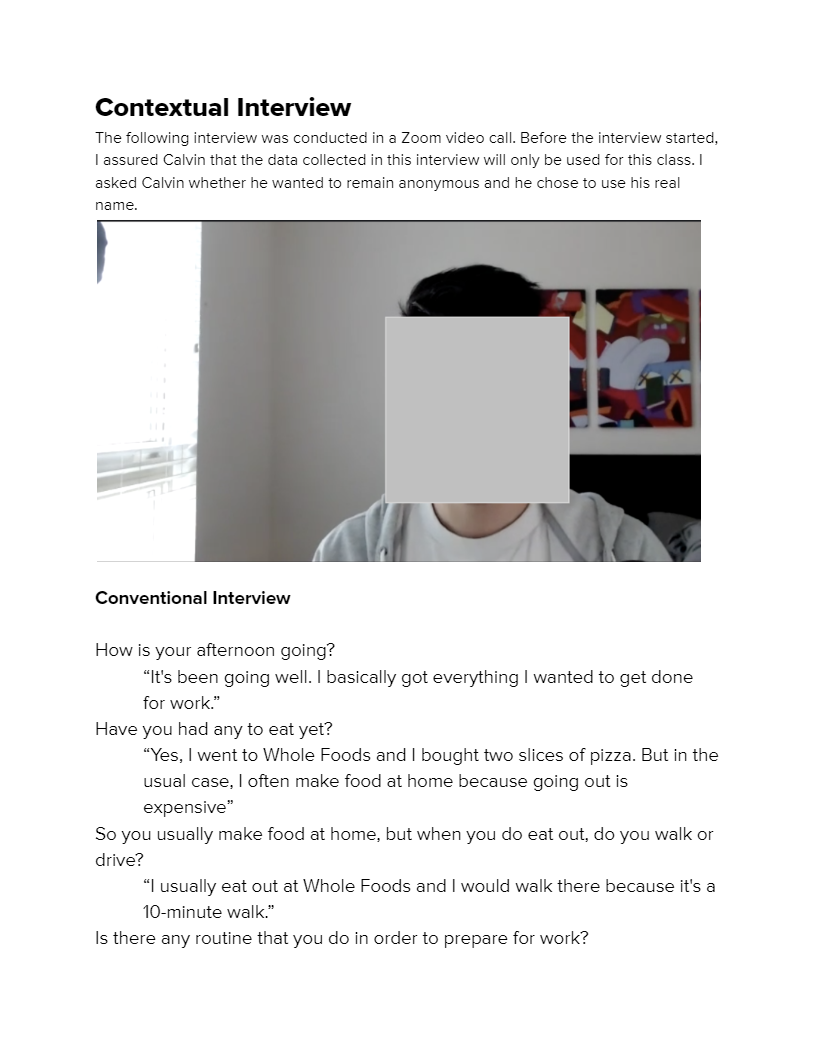
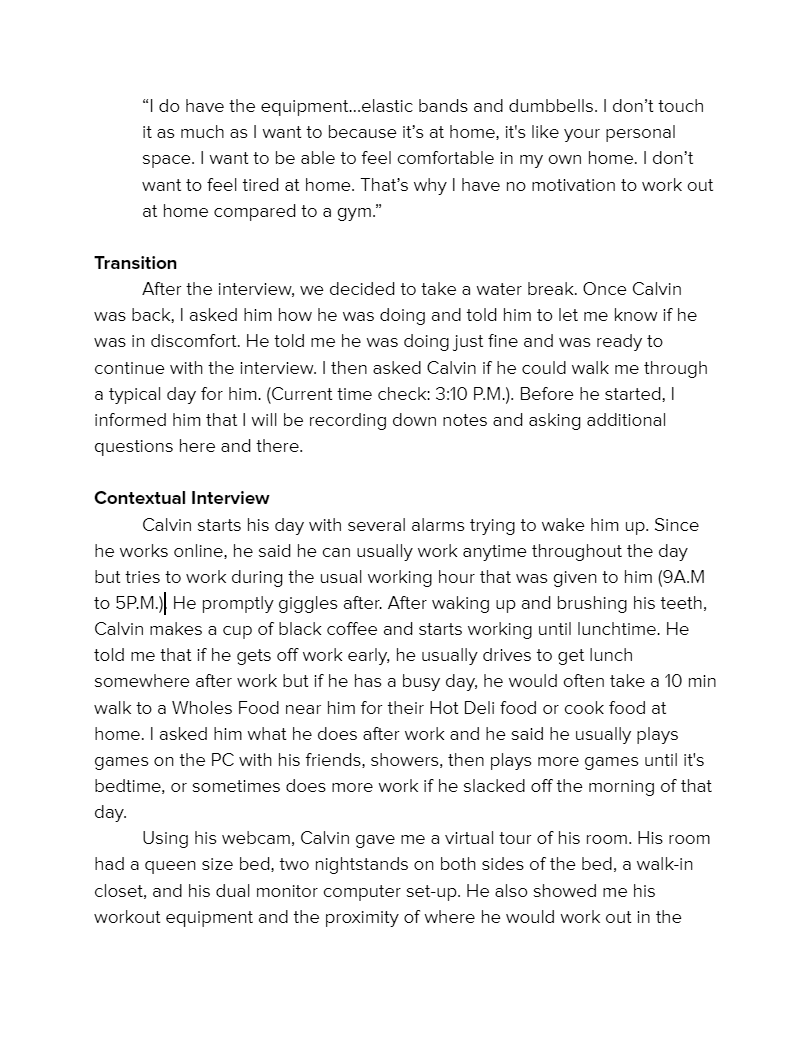
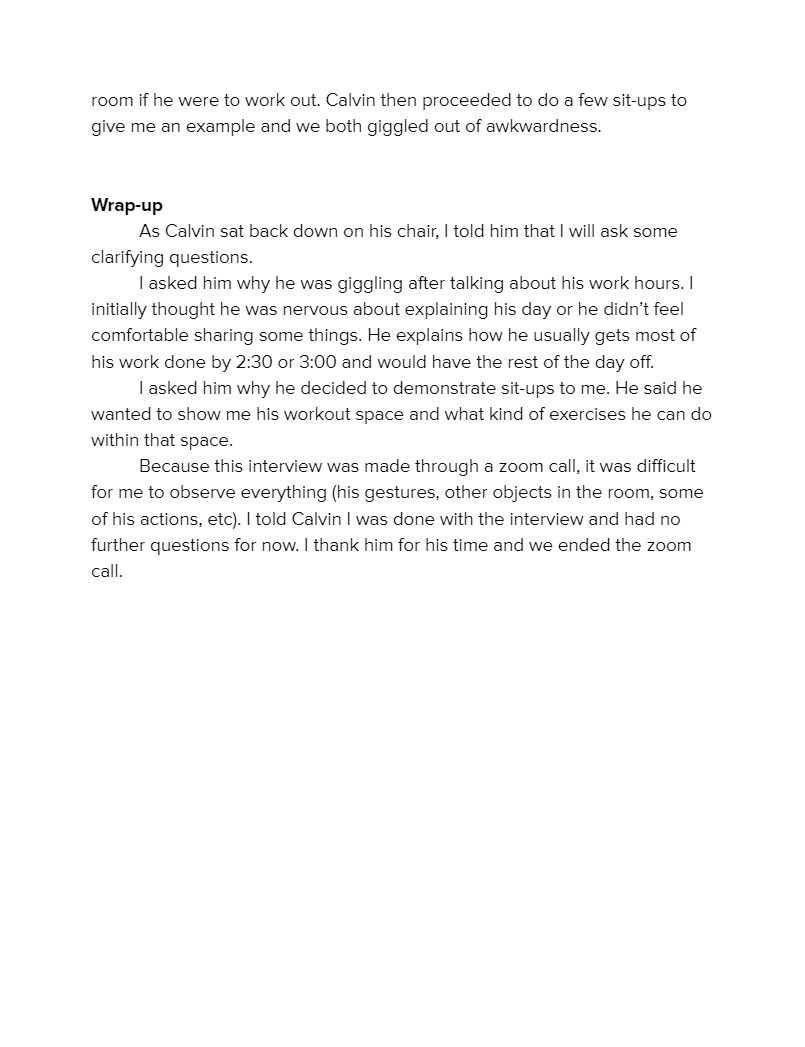
During my contextual inquiries, some participant expressed concerns about sharing personal information and allowing observation in their home.
Solution:
To address this, I emphasized the confidentiality of the information gathered and assured the participant that their privacy was a top priority. I explained that any data collected would be anonymized and used solely for this project's research purposes. Additionally, I offered the option for them to choose specific areas of their space or activities they were comfortable sharing.
.png)
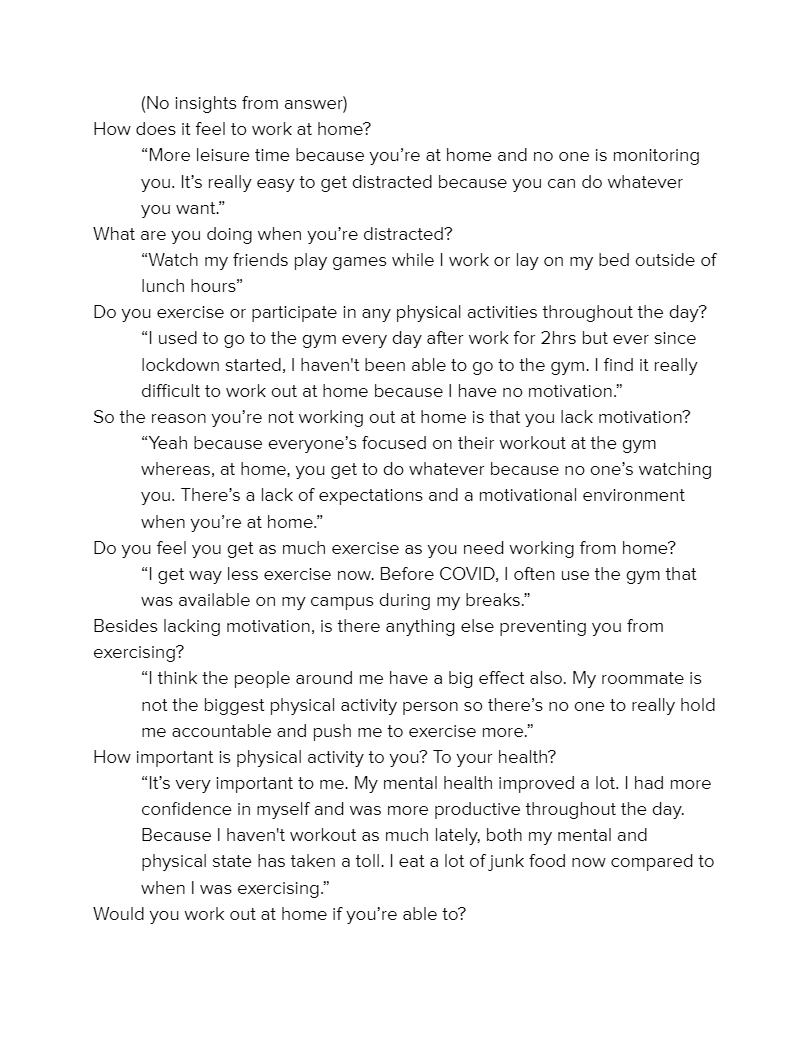
While our research provided valuable insights into the challenges faced by full-time remote employees in maintaining exercise routines at home, it became evident that a critical hurdle exists: motivation to continue exercising. Although some users exercise at home, they eventually stop exercising once motivation level starts taking a nose-dive.
To gain a clearer perspective, I've outlined a mini journey in order to identify opportunities to reignite motivation and provide the necessary support to keep the user engaged in their fitness endeavors:
.png)
.png)
.png)
Prior to initiating the design phase, we defined a set of goals based on our research findings and personas. These goals serve as a compass, ensuring that our design process remains attuned to the specific needs and pain points of our target users.
With our design goals guiding us, it's time to dive into the ideation process. This is where we unleash our creativity, generating a multitude of ideas for what a motivational experience would look like:
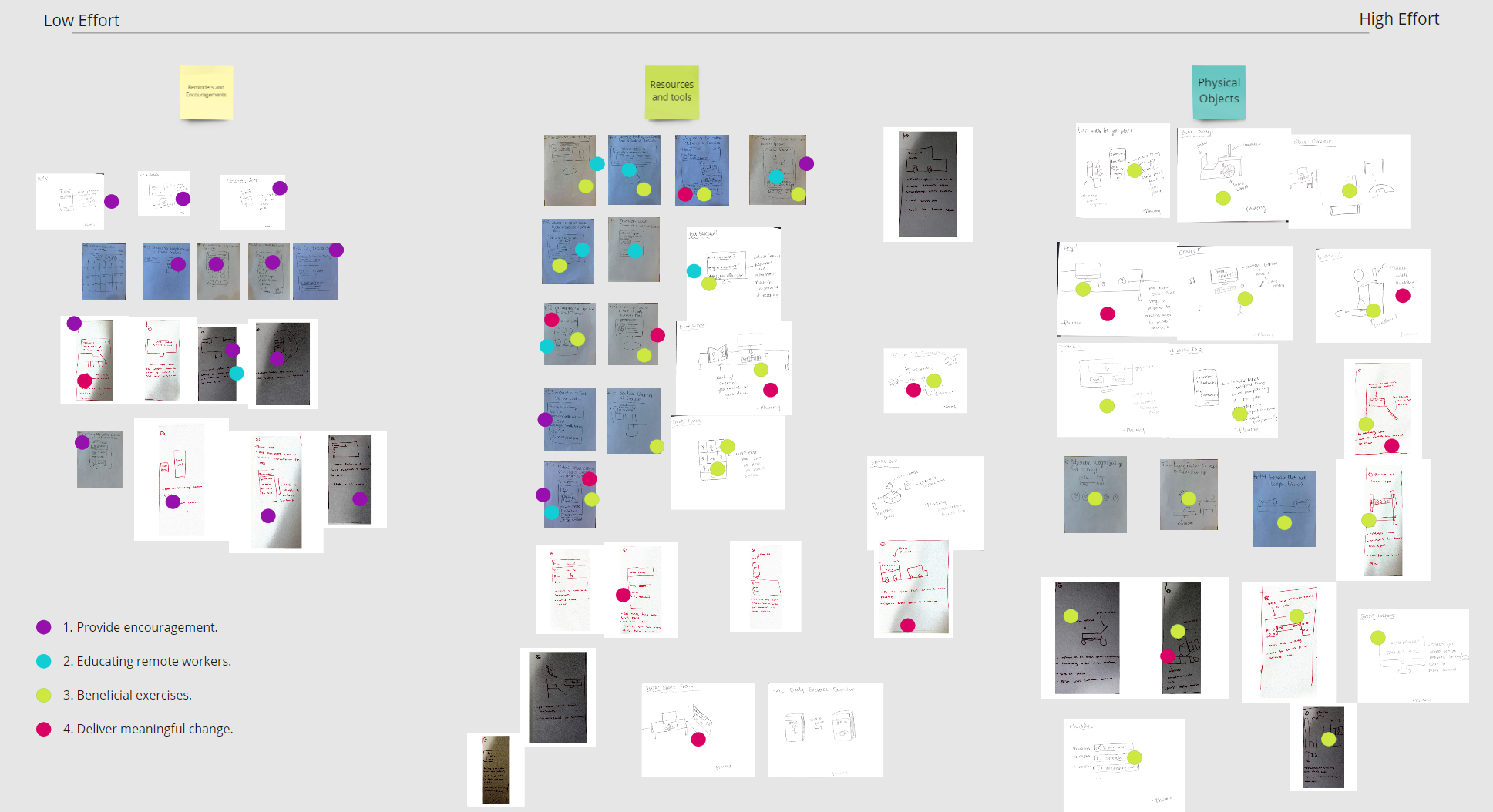
We employed two down-selection methods to identify the most promising ideas for refinement and development. First, we conducted a team-wide voting process to gather input from all members. Then, we organized the voted-on ideas along an axis spanning from low to high implementation effort. This allowed us to assess how each idea aligned with our design goals. Following extensive discussion, we concluded that a mobile application serves as the most comprehensive intervention, effectively encompassing all three core design goals.
To establish the initial design and flow of our app, we circled back to our design goals, research insights, and user needs. We then asked ourselves: What's the most straightforward paths to guide the user towards their goal?
.png)
.png)
.png)
For usability testing, we conducted moderated think aloud testing over Zoom. The 5 users included remote employees, my peers, teachers, and TA were asked to share what they were doing, thinking, and feeling while trying to complete the tasks given to them. I asked them to complete a learning modules, find a workout video that works for them, and track their progress.
Findings:
To ensure optimal results, we conducted three rounds of usability testing. As the UX designer, this iterative approach allowed me to effectively implement valuable feedback into the refinement process. Displayed below are images highlighting the critical issues identified through our usability studies, which I addressed and incorporated into the design.
.png)
.png)
.png)
.png)
.png)
.png)
When designing our app, I made sure to comply to the WCAG guidelines making color combinations with enough contrast so the content is clearly distinguishable from the surrounding page for an accessible color palette.
.png)
.png)
-poster-00001.jpg)


We presented our project to our class and allowed our peers to interact with our prototype. We presented our project to our class, allowing our peers to interact with our prototype. Overall, both our peers and our instructor expressed a desire for such an app to exist.
The usability tests were crucial. Seeing users interact with our designs and share feedback emphasized the value of user-centered design. The evolution of our prototypes based on these insights was a testament to the effectiveness of this iterative approach.
If we had more time:
I would focus on further refining the user interface to ensure it offers a seamless and intuitive experience. Conducting additional rounds of user testing, especially with a larger and more diverse group, would help polish the design for optimal usability.
What would the next step look like?
Overall, this was a super fun and rewarding project! Not only did I refined my user research and usability testing abilities, but also gained a deeper understanding of mobile design principles. Additionally, I discovered the value of team collaboration. While approaching a problem from diverse perspectives can be challenging, it often leads to remarkable outcomes. Recognizing and respecting the insights of my team members played a pivotal role in the project's success.